

We like to imagine that human progress unfolds in neat chapters – eras with crisp beginnings and clean endings. But real change rarely looks like that. It comes in waves: subtle at first, then disruptive, and eventually woven into the fabric of everyday life. Artificial Intelligence is one such wave. Not the loud, fear-mongering sci-fi version, but the quieter revolution that enters our homes, our conversations, and, inevitably, our identities.
What fascinates me is not just the technology itself, but the way it rearranges relationships. AI has become a catalyst for polarization – not only in politics or culture, but at the most intimate levels: family chats, friendships, workplaces.
A tool becomes a symbol. A creative experiment becomes a philosophical battleground. A simple request for feedback becomes a referendum on authenticity.
But beneath all the noise lies a more ancient human tension:
How we value experience – and how threatened we feel when the landscape shifts beneath our feet.
People often equate longevity with superiority. The years invested, the late nights, the sacrifices, the craft – these become moral currency. And when new tools emerge that give others access to the same creative space without the same history, it can feel like a personal devaluation. Suddenly, expertise becomes something we feel compelled to defend, sometimes fiercely.
I understand that instinct. I’ve lived it, over and over.
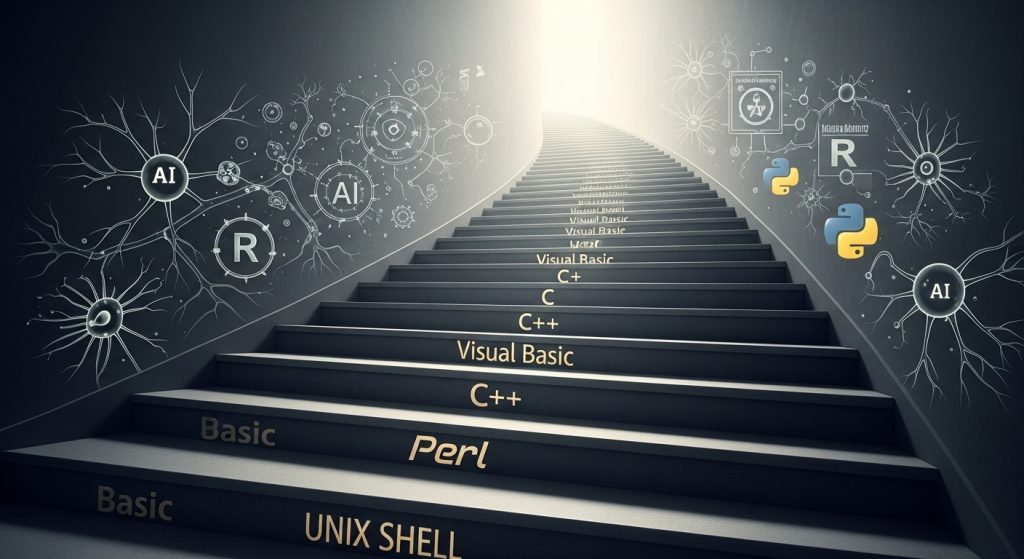
My own professional life has been a continuous cycle of reinvention. I didn’t start in a world of machine learning or generative models. I started in Pick-Basic, then shifted to Unix shell scripting, only to rebuild myself in Perl, just as the ground shifted again. When I finally felt anchored – immersed in C, with a solid technical foundation – the industry evolved once more.
C++ appeared. Visual Basic. Visual C. Entire paradigms reoriented themselves.
So, I started again. And again.
I moved through continents and cultures, evolving into data engineering, building expertise in Python, R, machine learning, databases, data warehousing, business intelligence.
What once set me apart gradually became common knowledge, absorbed into the talent pool until the edge I had sharpened began to dull.
And so, as always, I adapted.
This is what a lifetime in technology teaches you:
Skills erode. Tools expire. The only sustainable advantage is the willingness to evolve.
That’s not a weakness – it’s survival.
It’s also humility.
Experience matters, but it does not grant ownership over the future. Mastery is not a static achievement; it is a continual surrender to change. And if we cling too tightly to the past, we risk mistaking our history for our identity.
Which brings us to creativity and AI.
For some, AI tools feel like shortcuts – ways to bypass the grueling apprenticeship that traditionally defined music, writing, art. But for others, AI is simply the next instrument in a long lineage of instruments. A new medium to explore. A new partnership between imagination and capability.
I see artistry in the act of conducting AI itself: in the choices, prompts, refinements, and vision through which a human shapes machine outputs into literature, music, images, and compose works once thought to belong solely to artists.
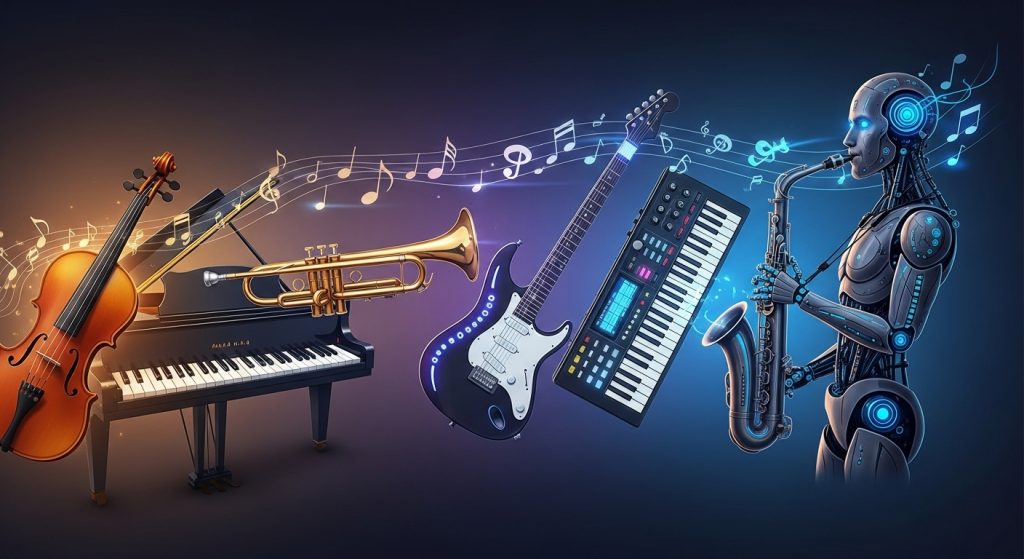
I believe the creative process now includes not just the hand that paints or the voice that sings, but also the mind that guides an intelligent system toward beauty, meaning, and expression. Directing AI is itself an emerging art form.
The tension arises when we confuse experience with exclusivity.
Just because we learned the old ways does not mean others must walk the same paths to be worthy. Just because something required years before does not mean it must require years forever. And just because a tool changes the creative landscape does not mean it erases the value of those who came before.
AI does not diminish traditional creators.
Traditional creators do not delegitimize AI-augmented ones.
Both simply inhabit different expressions of human creativity.
Yet these shifts expose our insecurities:
What if the skills we cherish lose their scarcity?
What if the rituals we endured no longer grant us distinction?
What if our identity as “experts” becomes porous?
These fears are not irrational; they are profoundly human.
But they can mislead us into gatekeeping, belittling, or invalidating others’ journeys.
The truth is that creation has always evolved.
Painters once scorned photography as mechanical fraud.
Photographers once dismissed digital cameras as cheating.
Cinematographers balked at CGI.
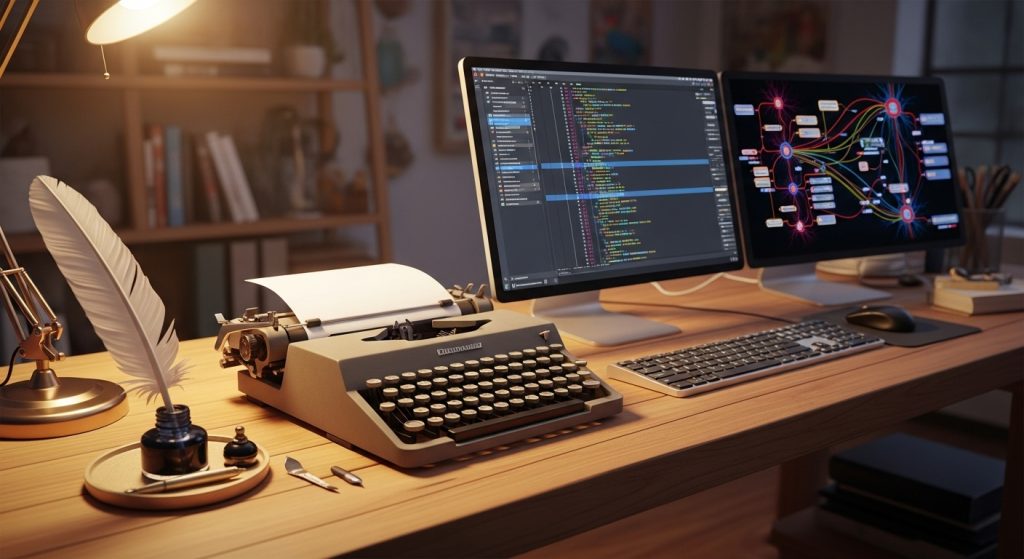
Writers balked at typewriters.
Musicians balked at synthesizers.
Every generation survives this confrontation.
Most eventually embrace the new tools.
Some even master them and find renewal.
AI is merely the latest ripple in that familiar pattern.
If there is an “Enlightenment” to be found in our time, it will not come from algorithms, models, or neural networks. It will come from the maturity to understand that our worth is not defined by the exclusivity of our methods, but by the sincerity of our expression.
The real question, then, is not whether someone “pressed a button,” but whether the result carries intention, emotion, and meaning. Whether the creator – augmented or otherwise – shows up honestly in the work.
Creativity is not a heritage to be policed.
It is a frontier to be explored.
And as I continue evolving – once more embracing a new wave of tools, reshaping my identity, learning, adapting, creating – I’m reminded of a simple truth:
We do not remain relevant by defending what once made us experts.
We remain relevant by having the courage to reinvent ourselves – again and again – without resentment.
This is the Age of Enlightenment we are being called into.
Not an age of machines replacing humanity, but an age of humans rediscovering what it means to grow.
Disclaimer: This post has been generated and/or enhanced with the assistance of artificial intelligence tools, using information available and believed to be current and accurate at the time of creation. However, the content may include speculative, interpretive, or subjective elements and does not necessarily reflect objective reality. The views and opinions expressed are solely those of the author and do not represent or imply the views of any employer, organization, or affiliated individuals. No endorsement, verification, or review by any such entities has been conducted or should be inferred.

1 Comment
Apreciei seu texto, seus esforços, sua dedicação e seu trabalho.
Continue em frente, com muito empenho! Boa sorte e excelentes resultados!!!!