
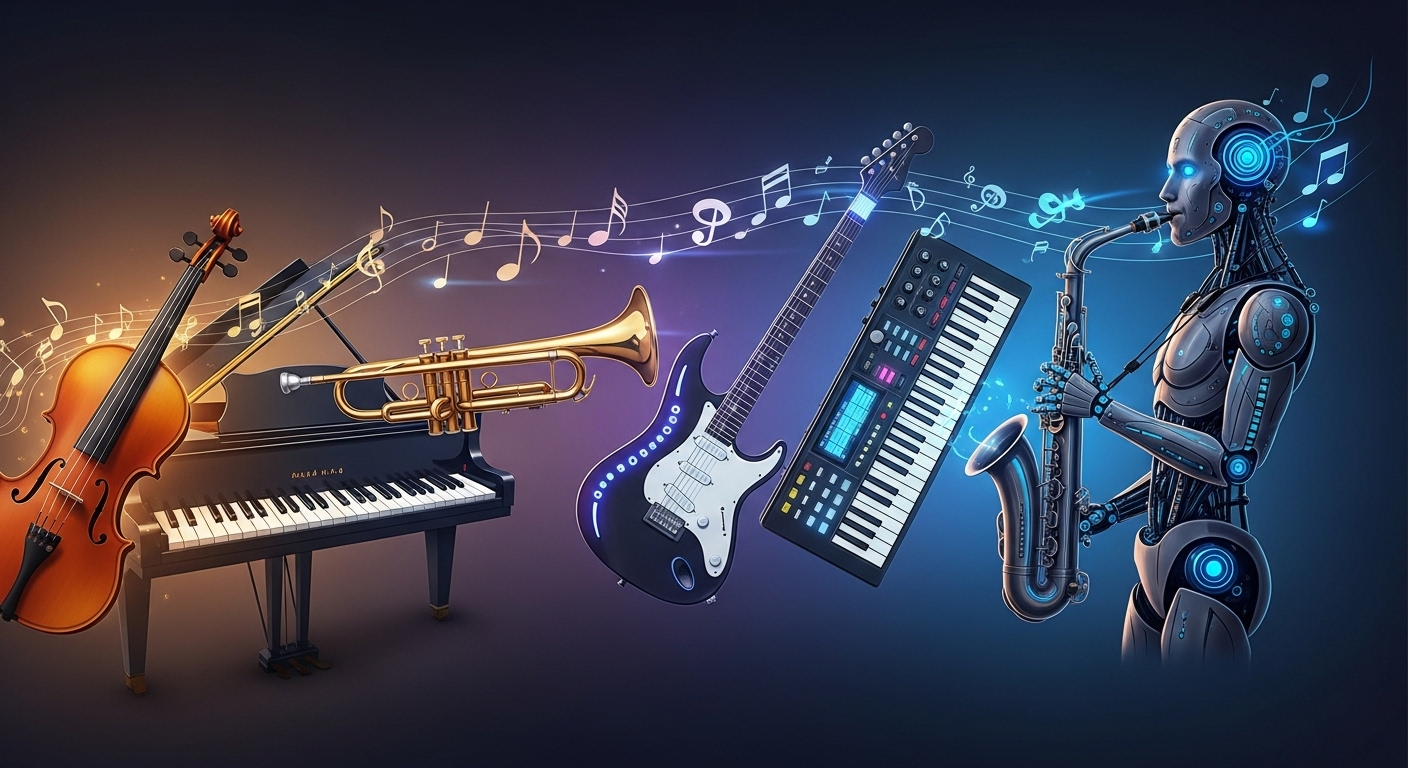
When people hear that I create music with AI, their first reaction is usually surprise.
Not because I cannot play an instrument. Like many people, I spent part of my youth learning the acoustic guitar. I can still play a little—”fiddle” is probably a more accurate description.
The surprise is because most people know me as the “IT Guy”, not someone involved in artistic pursuits.
What most do not know is that I am not just an IT guy, my career was built around data intelligence (data warehouses, business intelligence, data science, machine learning, etc) and what all those disciplines entail is that you use data to tell a story – and that is an artistic trait on its own (apart from my intrinsic and eclectic love for music).
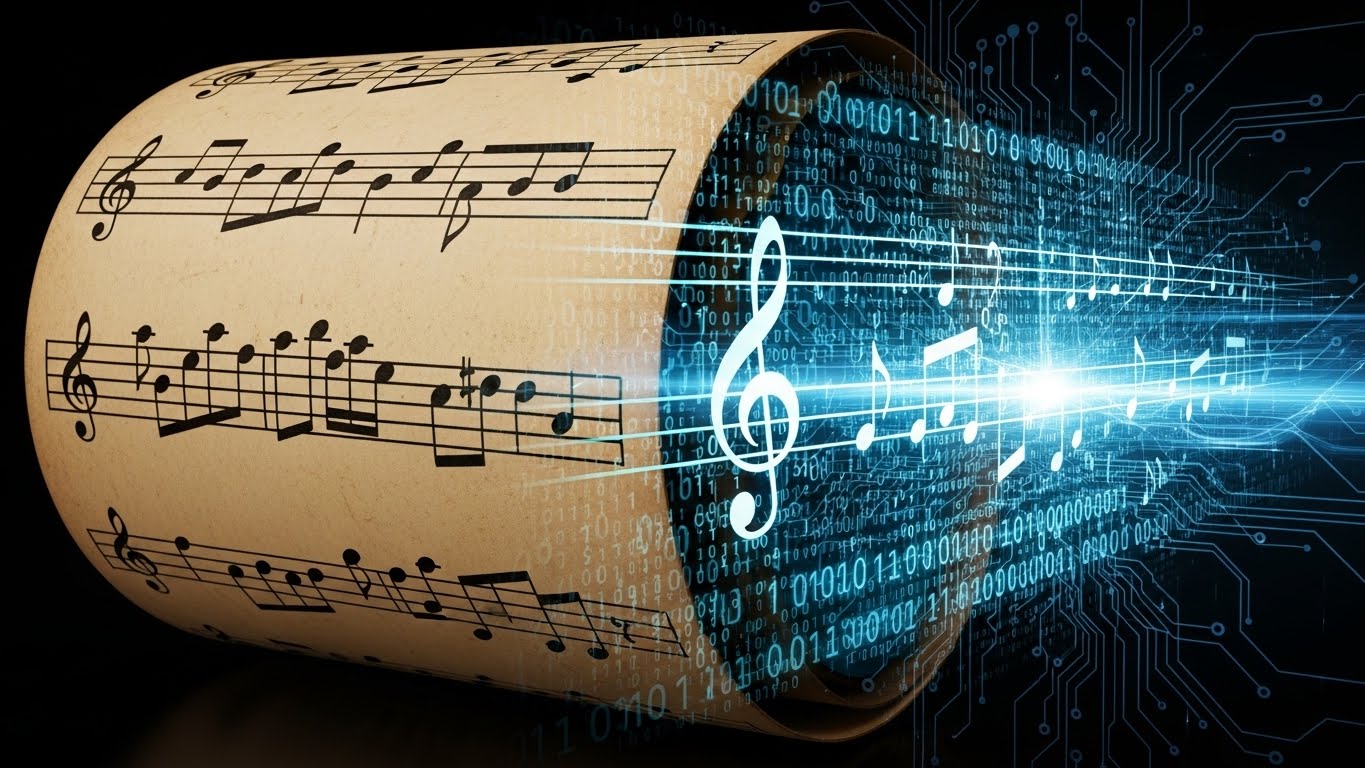
So, for me, writing a song is telling a story using a different medium and given my technological background and lack of mastery in music, the logical way was to use AI to create songs that tell my story.
It Started with Characters, Not Songs
I never wanted to generate random tracks.
I wanted my music to have personality, to convey emotion and be grounded in universal beliefs, so I create virtual AI artists that embody those emotions – and have a life of their own.
Not just names or avatars, but complete fictional personalities with histories, motivations, emotional baggage, visual identities, and a coherent artistic voice. Every virtual artist exists because there is something I want to express that doesn’t necessarily fit under my own name.
Tadeu Arcanjo carries my resilience. His songs are about getting knocked down and finding the strength to stand up again.
Maitê Luar represents another side of me: compassionate, determined and emotionally open. Carl Jung would probably smile at the idea that she embodies my anima, the feminine side of my personality.

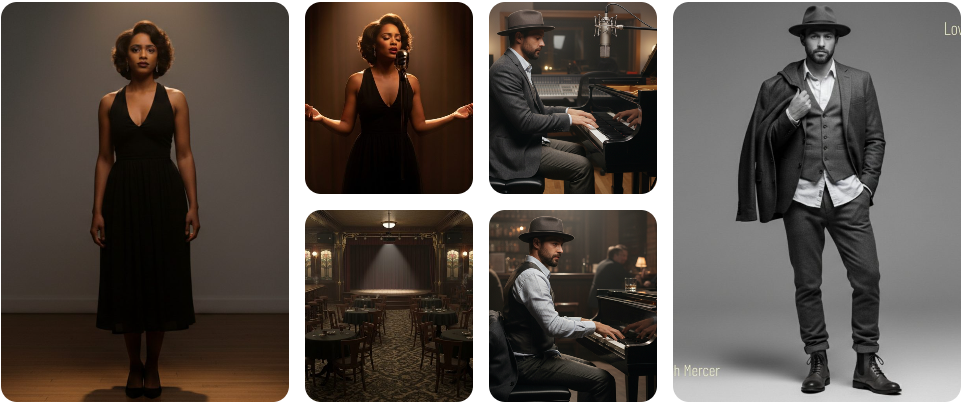
Jonah Mercer and Lola Bluegrave allow me to explore Blues and Jazz, while Rylan Creed and Willa Rhodes reinterpret some of those same emotional themes through American Country music.
None of them are me.
Yet all of them are.
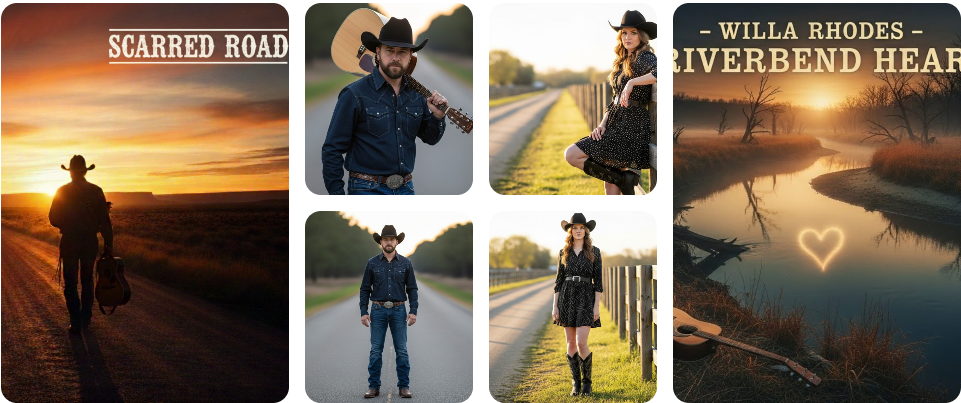
Each artist becomes another perspective through which I can tell stories.
Some are optimistic.
Some are melancholic.
Some explore loss.
Others explore hope, rebellion, nostalgia, or curiosity.
In many ways they are fictional, but they all contain a piece – or perhaps a face – of me.
Every Album Needs a Story

Since my end goal was to create narratives, I naturally gravitate toward albums.
An album is a journey.
I spend considerable time thinking about the emotional progression before writing individual songs. The opening track should invite the listener into a world. Middle tracks deepen the conflict or emotions. The closing song should leave a lasting feeling—even if every question isn’t answered.
I often sketch a narrative arc long before I begin writing lyrics.
What emotional state does the artist begin in (that’s very much in line with how I feel when I am working on any given album)?
What happens along the journey?
How does the character change?
Only after answering these questions do the individual songs begin to emerge.
Writing Lyrics Is More Personal Than People Expect
One misconception about AI-generated music is that the AI writes everything.
In my experience, the opposite is true.
The lyrics only become meaningful when I feed the system meaningful emotions.
Many songs begin with memories.
Conversations.
Moments of self-doubt.
Excitement about a new beginning.
Thoughts that would probably never appear in a technical blog post.
I don’t begin with rhyme or rhythm.
I begin with emotion.
I write down how I feel, what happened, or the message I want to convey. Sometimes it’s just a page of thoughts. Sometimes it’s only a paragraph.
AI then helps reshape those thoughts into something more poetic before finally transforming them into music.
The interesting part is not whether every word originates from me.
The interesting part is whether the finished song genuinely reflects how I feel.
Looking back, I don’t think I’ve changed careers as much as I’ve changed mediums. In business intelligence, I spent decades transforming raw data into stories people could understand and act upon. Songwriting feels surprisingly similar. Instead of datasets, I work with memories. Instead of dashboards, I create melodies. But the goal is the same: find meaning in complexity and communicate it in a way that resonates with someone else.
When AI Understands Emotion
One of the biggest surprises has been working with Suno.
It doesn’t “understand” emotions the way humans do.
It has never experienced heartbreak or celebrated success or stayed awake late at night replaying an important memory.
Yet somehow, given enough context, it often produces music that feels emotionally authentic.
Sometimes the melody perfectly matches what I had imagined.
Sometimes it completely changes my expectations and creates something even better.
Other times it misses the mark entirely.
That unpredictability is part of the creative process.
Instead of treating AI like a replacement musician, I think of it more as an improvisation partner.
Designing the Entire Artistic Identity
The songs are only one piece of the project.
Every artist needs visual consistency.
Album covers.
Promotional images.
Artist biographies.
Social media personalities.
Recurring themes.
Even typography and color palettes influence how listeners perceive the music before pressing Play.
Creating a believable virtual artist feels surprisingly similar to building a software product.
There is branding, user experience, storytelling, iteration, feedback and continuous improvement.
The difference is that the product is emotional rather than functional.
Publishing Is the Easy Part
Compared to the creative process, distribution is almost trivial.
Platforms like DistroKid make it possible to publish music across Spotify, Apple Music, Amazon Music, YouTube Music, Deezer, Tidal, and dozens of other streaming services with remarkably little effort.
Within a relatively short time, songs become available worldwide.
Technically, publishing has never been easier.
Emotionally, releasing music remains difficult.
Every release asks the same question:
“Is this good enough to become permanent?”
That feeling hasn’t changed, regardless of whether AI helped create the music.
What AI Changed—and What It Didn’t
AI dramatically accelerates execution.
Ideas that previously would have required musicians, studios, producers, and weeks of work can now be explored in hours.
That doesn’t eliminate creativity.
Instead, it shifts where creativity happens.
Less time is spent on production logistics.
More time is spent on concepts, storytelling, editing, sequencing, and emotional direction.
The bottleneck is no longer technical skill or musical aptitude, it is imagination.
Looking Forward
I don’t see AI replacing artists.
I see it expanding who gets to become one.
People who have stories but cannot play an instrument can finally express themselves musically.
People who have ideas for entire fictional bands can bring them to life.
People who have lived complicated lives can transform those experiences into songs.
That is perhaps the most exciting aspect of AI music.
Not the automation.
The accessibility of creativity.
For me, every virtual artist is another way of exploring ideas that matter to me.
Every album becomes another chapter.
Every lyric carries traces of experiences that shaped my life.
Every song begins with a human experience.
AI simply helps me turn that experience into something other people can hear.
Disclaimer: This post has been generated and/or enhanced with the assistance of artificial intelligence tools, using information available and believed to be current and accurate at the time of creation. However, the content may include speculative, interpretive, or subjective elements and does not necessarily reflect objective reality. The views and opinions expressed are solely those of the author and do not represent or imply the views of any employer, organization, or affiliated individuals. No endorsement, verification, or review by any such entities has been conducted or should be inferred.
