

The boundaries between the real and the artificial are becoming increasingly blurred. In today’s hyperconnected world, a new phenomenon is taking shape: AI doppelgängers and synthetic influencers. These are digital personas—sometimes modeled after real people, sometimes entirely fictional—that leverage artificial intelligence to interact, influence, and even earn.
While brands see opportunity in flawless, controllable avatars, society faces profound ethical dilemmas: Who owns a digital likeness? Can audiences trust synthetic voices? And what happens when human labor is replaced by algorithmic perfection? This post explores the promises and paradoxes of AI-driven identities, tracing real-world cases, legal battles, and the psychological impact of living in a world where reality itself is negotiable.
What Are AI Doppelgängers?
An AI doppelgänger is a digitally generated clone of a real person, powered by machine learning and generative technologies. They can mirror someone’s appearance, voice, and even communication style with uncanny precision.
- Celebrities and politicians are already experimenting with AI versions of themselves to attend virtual events, deliver personalized fan interactions, or protect their “brand” across multiple platforms.
- On the darker side, AI doppelgängers also pose risks for identity theft, deepfake misuse, and reputational harm—a growing concern in an era where authenticity is already fragile.
The Rise of Synthetic Influencers
Unlike doppelgängers, synthetic influencers are born entirely in the digital realm. They don’t exist in the physical world, but they amass huge followings, land sponsorship deals, and shape cultural narratives.
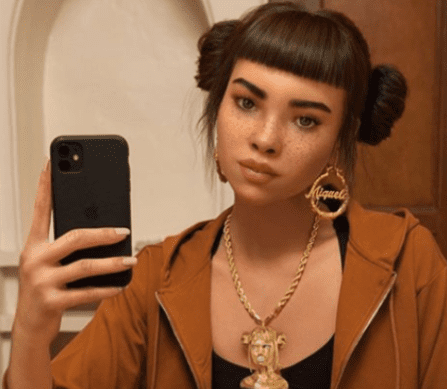
Examples like Lil Miquela and Shudu Gram demonstrate how virtual characters can build loyal audiences, blur the line between fiction and reality, and even challenge traditional definitions of beauty, identity, and influence.
Brands see synthetic influencers as attractive partners: they are controllable, never age, never misbehave, and can be “perfectly optimized” for engagement.
The Ethical Paradox: When Identity Becomes Synthetic
The promise of AI-powered digital doubles and influencers carries an undercurrent of ethical tension. What happens when authenticity is no longer a given, and digital identities can be fabricated, manipulated, or exploited at scale?
1. Authenticity vs. Fabrication
The very core of influence – whether political, social, or commercial – relies on trust. When AI can generate a nearly flawless doppelgänger, the line between genuine and fabricated content collapses.
- Deepfake scandals have already disrupted this trust. In 2019, a manipulated video of Nancy Pelosi was circulated, making her appear inebriated, fueling political misinformation.
- In 2021, a deepfake of Tom Cruise went viral on TikTok (Deepfake Author), crafted by a visual effects artist. Although intended as art, it highlighted just how convincing synthetic doubles can be—and how easily audiences could be deceived.
The ethical issue isn’t just deception, but the erosion of credibility itself. If everything can be faked, how do we decide what’s real?
2. Labor & Creativity
Synthetic influencers never tire, never demand pay raises, and never tarnish their reputation. For brands, this is appealing. For human creators, it’s existential.
The Japanese virtual idol Hatsune Miku, entirely synthesized, has sold out stadium concerts and endorsed Toyota.
Lil Miquela, a computer-generated influencer, has landed contracts with Prada, Calvin Klein, and Samsung—opportunities traditionally given to human models.

Here lies the ethical dilemma: should human labor in creative industries be outsourced to algorithms? And if so, how does society compensate for lost opportunities for real talent?
3. Consent & Control
The most contentious paradox emerges when AI doppelgängers are modeled after real people without their consent.
- Bette Midler v. Ford (1988) and Tom Waits v. Frito-Lay (1998/1992) – long before today’s AI – set legal precedents on “voice impersonation,” establishing that performers own the rights to their persona.
- In 2020, Jay-Z’s Roc Nation filed takedown notices against an AI-generated YouTube channel that cloned his voice to rap Shakespeare. Though not a lawsuit, it showed the growing battle over ownership of identity in the AI era.
- More recently, Scarlett Johansson took action against an AI voice app in 2023 that mimicked her voice without permission.
The legal system is only beginning to confront these challenges. Intellectual property law was not designed for digital clones, and litigations are piecemeal at best.
4. Psychological Impact
Audiences form parasocial relationships with influencers and celebrities. What happens when those influencers aren’t real?
- In surveys, fans of Lil Miquela often report forgetting she’s not human, despite full knowledge of her synthetic nature. This creates emotional dissonance: are feelings of attachment valid if the persona is fictional?
- The awareness of Virtual Influencers has reached a significant portion of the populace across a wide demographic dispersion.
- In darker scenarios, AI-generated “girlfriend” or “boyfriend” chatbots marketed as influencers can blur the line between companionship and commodification, raising questions about emotional exploitation.
Toward Ethical Governance
The ethical paradox is less about the technology itself and more about its use:
- Should synthetic influencers be required to disclose their artificiality?
- Should individuals hold perpetual rights over their digital likeness?
- Should audiences be protected from psychological manipulation through disclosure laws?
Without clear frameworks, we risk walking into a world where identity is infinitely replicable, but accountability is scarce.
Opportunities Ahead
Despite the risks, AI doppelgängers and synthetic influencers also open doors for innovation:
- A musician could clone themselves digitally to perform simultaneously in different cities.
- A teacher’s AI replica could tutor students worldwide, in multiple languages, 24/7.
- Storytelling and entertainment could evolve into interactive experiences where audiences co-create narratives with lifelike characters.
Navigating a Synthetic Future
The challenge lies not in stopping these innovations, but in governing them responsibly. Regulations, digital identity protections, and clear disclosure rules will be critical to ensure society benefits from synthetic personas without falling victim to manipulation.
Ultimately, AI doppelgängers and synthetic influencers invite us to ask: What does it mean to be real in a digital-first world? As the line blurs further, the choices we make today will shape the very fabric of authenticity tomorrow.
Disclaimer: This post has been generated and/or enhanced with the assistance of artificial intelligence tools, using information available and believed to be current and accurate at the time of creation. However, the content may include speculative, interpretive, or subjective elements and does not necessarily reflect objective reality. The views and opinions expressed are solely those of the author and do not represent or imply the views of any employer, organization, or affiliated individuals. No endorsement, verification, or review by any such entities has been conducted or should be inferred.
