
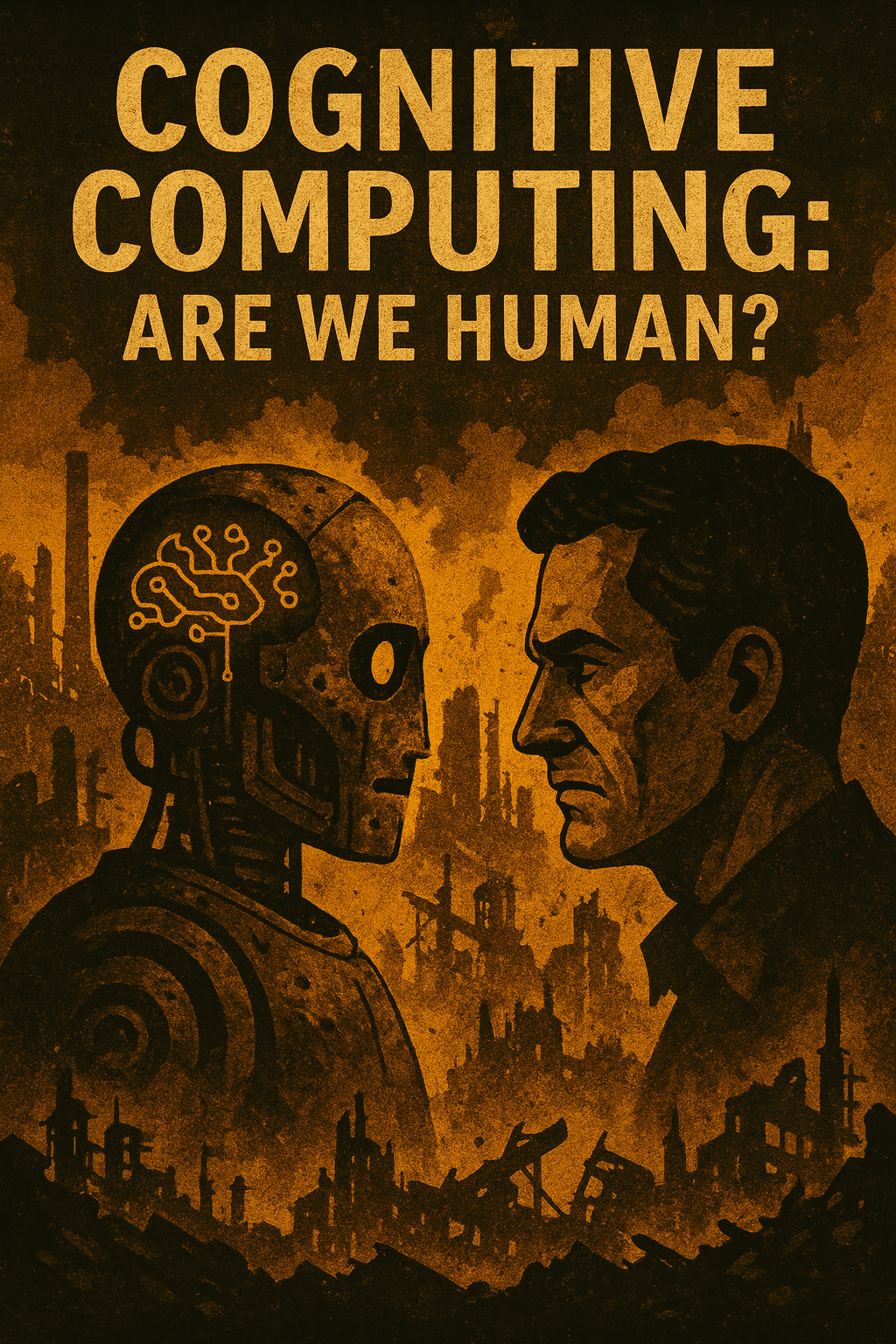
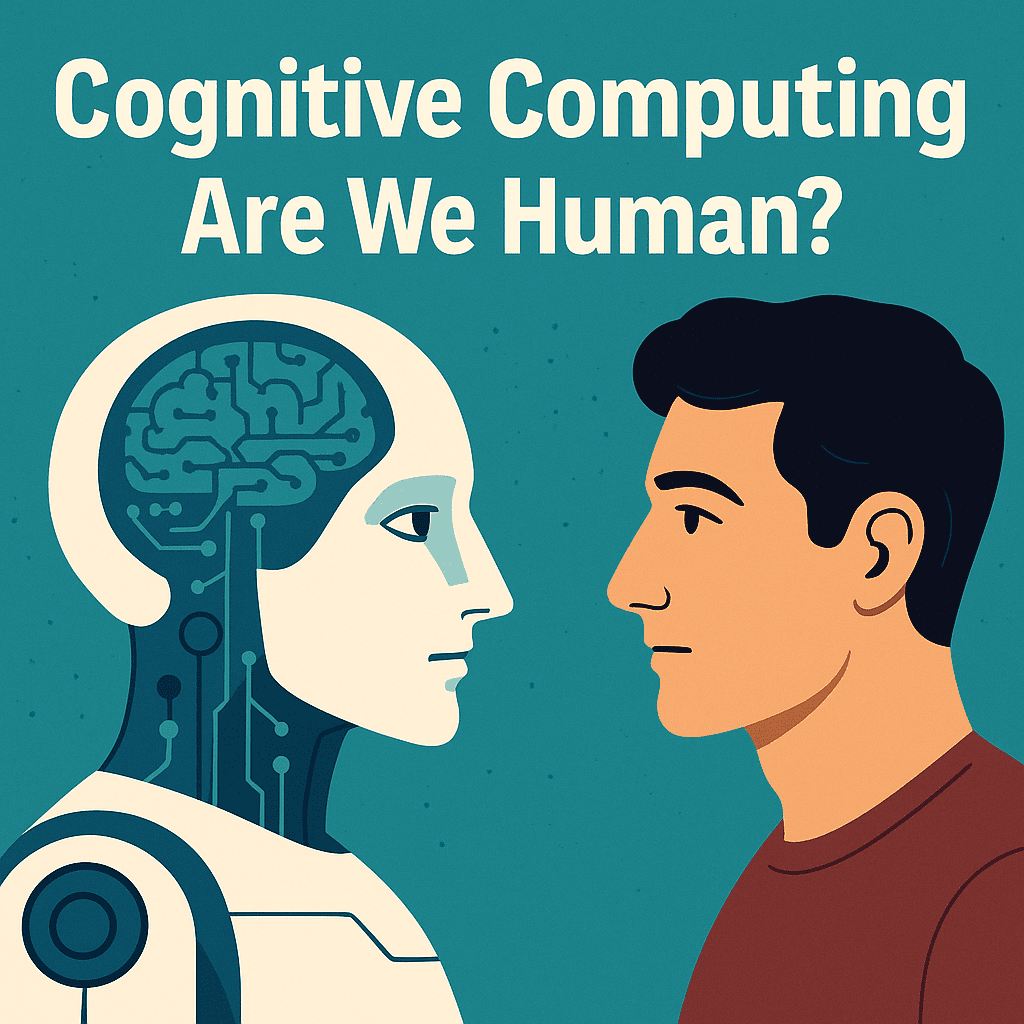
Cognitive computing—broadly referring to AI systems designed to simulate aspects of human thought such as learning, reasoning, and decision-making—has advanced significantly in recent years. However, it also carries fundamental limitations that arise from its lack of true real-world perception and incomplete grasp of human nuance.
Advancements in Cognitive Computing
- Natural Language Understanding
- Systems can parse, generate, and contextualize human language at scale. Large language models have advanced to a point where dialogue can feel natural, context-aware, and often insightful.
- Domain-specific cognitive systems (e.g., in healthcare or law) can synthesize large bodies of structured and unstructured text, surfacing relationships humans might miss.
- Pattern Recognition Beyond Human Scale
- Cognitive systems excel at detecting correlations and subtle statistical relationships in massive data streams—genomics, financial transactions, medical imaging—that humans cannot process unaided.
- These abilities help in early disease detection, fraud prevention, or climate data modeling.
- Decision Support
- Rather than replacing humans outright, cognitive systems increasingly act as decision-augmenters: flagging anomalies, proposing solutions, and providing probabilistic insights.
- Their strength lies in consistency, scalability, and resistance to fatigue or bias of certain kinds.
- Personalization and Context Awareness (within data reach)
- AI can adapt recommendations, workflows, or interactions to individuals’ historical behavior, leading to more tailored healthcare regimens, education platforms, and user experiences.
Limitations and Where AI Falls Short
- Lack of True Perception
- Cognitive systems operate on representations of the world (data, sensors, simulations), not the world itself.
- They lack embodied, experiential grounding—meaning they cannot “feel,” “perceive,” or “intuit” the nuances of lived experience. A human can interpret tone, irony, or cultural symbolism that AI struggles with.
- Dependence on Available Data
- AI’s knowledge is bounded by its training data or accessible streams.
- External factors—social shifts, local cultural practices, sudden political events—may lie outside its “data horizon,” leading to brittle or outdated conclusions.
- Failure in Understanding Human Nature
- Subtleties like empathy, ethical judgment, humor, or emotional resonance are approximated but not genuinely understood.
- Humans weigh trust, social context, and implicit norms in ways that cognitive systems still cannot fully model.
- Bias and Overgeneralization
- AI reflects the biases of its data, scaling them in invisible ways. For example, healthcare AIs may underperform on underrepresented populations.
- Cognitive systems often conflate correlation with causation, mistaking statistical patterns for explanatory truths.
- Contextual Fragility
- AI systems excel in bounded contexts (diagnosing pneumonia from scans, recommending financial trades).
- When confronted with ambiguous, contradictory, or incomplete real-world scenarios that require moral judgment or cross-domain synthesis, they falter.
Why External Factors Are Hard to Encompass
- Dynamic Environments: Human societies are constantly changing. Cognitive systems need retraining and re-contextualization to remain relevant, whereas humans adapt flexibly in real time.
- Tacit Knowledge: Much of human intelligence involves tacit, embodied knowledge—things we know how to do without being able to articulate them (e.g., comforting someone, improvising in crisis). AI has no natural path to acquiring this.
- Interdependence of Factors: In the real world, economics, politics, culture, and psychology intermingle in nonlinear ways. Modeling all externalities is computationally prohibitive, and incomplete models yield brittle reasoning.
Where Cognitive Computing Succeeds vs. Fails
- Succeeds:
- Structured domains with abundant high-quality data (medicine, logistics, finance).
- Tasks requiring consistency, memory, and scaling across massive information sets.
- Supporting human cognition by offering insights humans might miss.
- Fails:
- Open-ended, morally ambiguous, or highly context-dependent decisions.
- Interpreting tacit human intentions, cultural signals, or emotional subtleties.
- Adapting seamlessly to novel, unstructured environments without retraining.
✅ In essence: Cognitive computing augments but does not replicate human cognition. Its strengths lie in scale, precision, and data-driven inference. Its limitations stem from the absence of lived experience, true perception, and the embodied intuition that humans bring to navigating the messy, nuanced world.
Disclaimer: This post has been generated and/or enhanced with the assistance of artificial intelligence tools, using information available and believed to be current and accurate at the time of creation. However, the content may include speculative, interpretive, or subjective elements and does not necessarily reflect objective reality. The views and opinions expressed are solely those of the author and do not represent or imply the views of any employer, organization, or affiliated individuals. No endorsement, verification, or review by any such entities has been conducted or should be inferred.
