
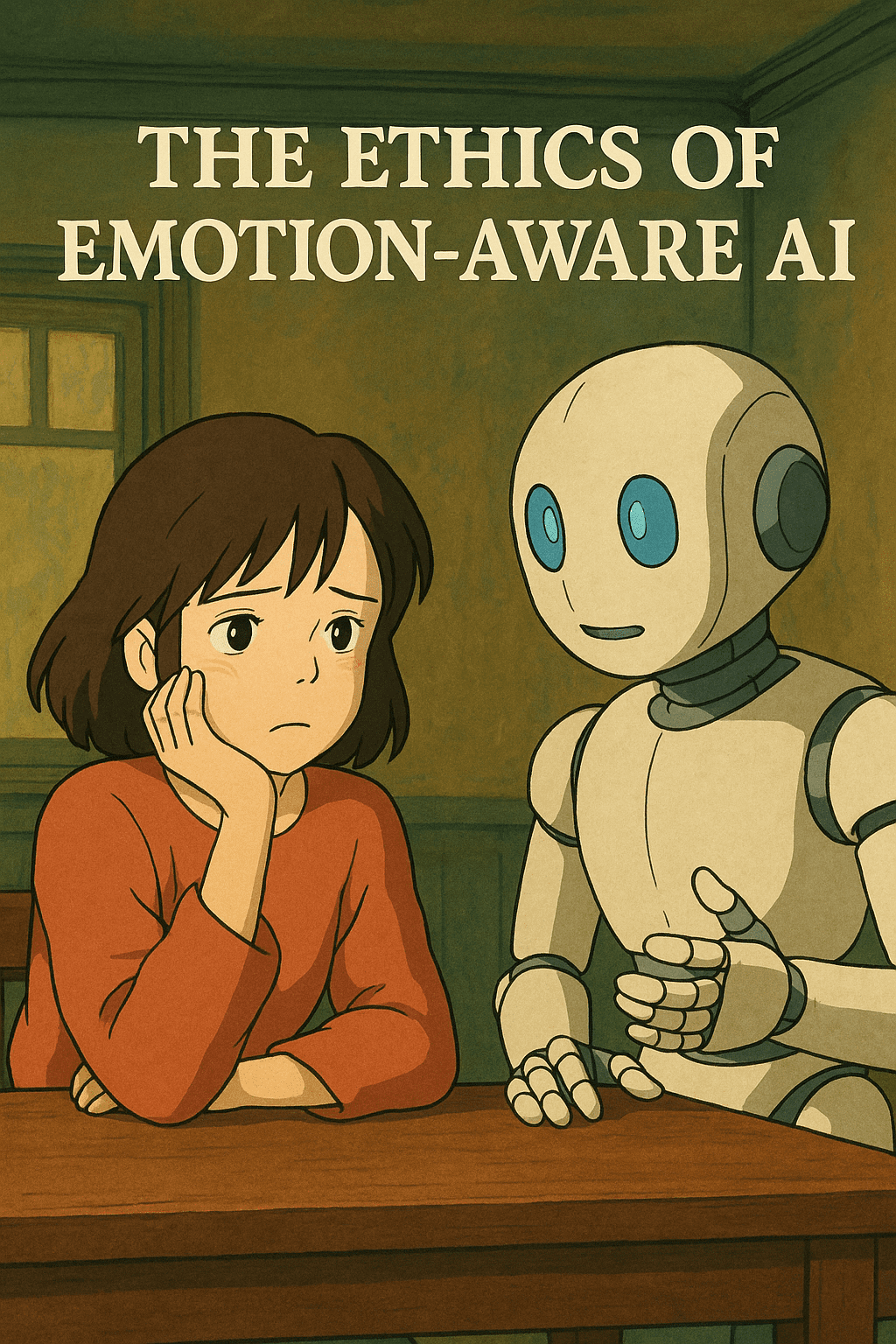
Emotion-aware AI isn’t just theoretical—it’s being applied across multiple domains today. When designed and deployed ethically, these systems offer profound benefits, from improved safety to more supportive environments.
But as with many advances in AI, this technology also raises pressing ethical questions. Who benefits from emotion-aware AI? Who is put at risk? And how should society draw boundaries around its use?
The Promise of Emotion-Aware AI
Healthcare & Well-being – Emotion-aware systems in healthcare can serve as early-warning systems:
- In elder care and mental health, emotion-aware companions or monitoring systems could detect signs of loneliness or distress and relay alerts to caregivers, acting as a supportive aid when human interaction is limited.
These applications highlight AI’s potential to be both proactive and empathetic.
Smarter Cars, Safer Roads – Vehicles equipped with emotion detection are moving from labs to roads:
- Affectiva Automotive AI tracks driver emotions, distraction, and drowsiness using in-cabin sensing (face, voice, posture). It has been integrated with several major automakers—including BMW, Hyundai‑Kia, Porsche, Aptiv, and more—to improve safety and in-vehicle experience (Digital Data Design Institute at Harvard – Affectiva – The Empathetic Car)
- Companies like Eyeris offer advanced in-cabin sensing—including real-time mood, attention, and passenger tracking. Their technology has been showcased in concept cars such as Toyota’s Concept‑i and featured at CES and in production reference designs (Eyeris).
- Smart Eye, a Swedish firm, has deployed driver monitoring systems (DMS) in over a million cars worldwide. With features like eye tracking and emotion detection, their Interior Sensing platform enhances safety and comfort—and aligns with new EU regulations requiring such tech in future vehicles (Smart Eye).
- Legislation also progresses: European mandates (e.g., ADDW in the EU’s General Safety Regulation) now require driver monitoring systems—either eye gaze or facial detection—to help prevent distracted driving.
Takeaway: Emotion-aware systems are already enhancing road safety and responsibly adapting to real-world regulatory and technological demands.
Emotion-Sensitive Learning – Emotion recognition in classrooms can transform learning:
- Adaptive systems can identify when students are confused or disengaged, prompting timely interventions such as extra examples or pacing adjustments.
While specific deployments aren’t detailed here, the foundational research in affective computing supports real-time emotional feedback as an emerging force in personalized education (Affective computing).
Customer Service & Business Experience – Emotion-aware AI:
- Helps customer service bots detect frustration in tone and route users to a human agent when needed.
- In retail, AI can adjust tone and response based on shopper emotion, creating smoother and friendlier interactions.
- Internally, HR tools can flag burnout risk—fostering proactive wellness measures rather than punitive oversight.
Natural, Insightful, Responsive – Emotion-aware tech is making everyday interactions more fluid:
- Media & advertising: Affectiva’s earlier research demonstrated how facial emotion tracking during ad viewings correlated strongly with sales effectiveness—providing more nuanced insights than self-reports alone (Affectiva: Do Emotions in Advertising Drive Sales?).
- Adaptive media: For example, interactive narratives or gaming platforms could adapt in real time to your emotional state (e.g., easing tension if you seem stressed) (WIRED) – The New Yorker.
Societal & Cultural Impact – Emotion-aware systems may eventually help on a broader social scale:
- Monitoring communal emotional states during crises could guide public health or emergency response.
- NGOs could better gauge emotional feedback in communities—informing more empathetic and effective outreach.
- Emotion-aware interfaces might ease intercultural communication by helping systems better interpret emotions across cultural norms.
The key promise is that empathy – and care – can be scaled responsibly, provided privacy and consent are prioritized.
Summary Table: Real-World Emotion-Aware AI in Action
| Domain | Real-World Example & Benefit |
| Safety (Automotive) | Affectiva in‑cab sensing for drowsiness/anger; Smart Eye’s DMS in 1M+ cars; EU regulations mandating DMS Affective computing, Affectiva |
| Concept Cars & R&D | Toyota’s Concept-i (Yui), employing emotion-aware visuals & responses WIRED – Eyeris |
| Advertising | Affectiva’s facial coding linking emotion tracking with ad sales effectiveness Affectiva – The New Yorker |
| Media Personalization | Technology adapting content based on real-time viewer emotional responses WIRED |
| Education & Healthcare (Research-level) | Affective computing research shows potential to tailor learning and patient care based on emotional cues Wikipedia |
The vision is compelling: AI that doesn’t just process our words, but also “understands” the feelings behind them.
The Risks and Ethical Dilemmas of Emotion-Aware AI
While emotion-aware AI has clear benefits, it also introduces profound ethical risks. These challenges go beyond technical hurdles; they strike at the core of human dignity, privacy, and autonomy.
Privacy Intrusions: Turning Feelings Into Data
Unlike a password or a shopping history, emotions are not something people usually expect to be recorded or stored. Yet, emotion-aware AI often relies on sensitive inputs such as facial expressions, tone of voice, heart rate, or eye movements. Capturing and analyzing these signals creates highly personal datasets.
The danger is twofold:
- Surveillance creep: Employers, governments, or corporations could monitor emotional states without consent. Imagine a workplace with AI that silently tracks stress levels to flag “underperformers.”
- Data security: Emotional data, if leaked, could reveal intimate information about mental health, relationships, or vulnerabilities. Such leaks would be far more invasive than, say, a hacked email account.
Manipulation and Exploitation: Selling to the Heart
Marketing has always sought to influence consumer emotion, but emotion-aware AI could supercharge this by detecting precisely when a person is most persuadable.
- Micro-targeting: Algorithms might push ads or political content when someone feels lonely, anxious, or angry moments when critical thinking is most compromised.
- Addiction loops: Platforms could optimize content to keep users emotionally hooked, perpetuating cycles of outrage or validation-seeking.
This raises a key ethical question: should AI be allowed to leverage emotional vulnerabilities for profit?
Bias and Misinterpretation: Whose Emotions Count?
Emotions are not universal in expression. A smile can signify joy in one culture and discomfort in another. Women, for instance, are often perceived as “more emotional” than men, and people of color face frequent misreadings of their facial expressions by AI systems.
- Algorithmic bias: If training data lacks diversity, AI may systematically misinterpret emotions across cultures, ages, or neurodiverse individuals.
- Consequences: A student misread as “disengaged” might be penalized in class, or a driver wrongly flagged as “angry” could face unfair consequences.
Consent and Transparency: Hidden Emotional Surveillance
Most people understand when their clicks or location are being tracked, but far fewer realize when their emotions are under observation. Many emotion-sensing systems operate subtly—via webcams, microphones, or biometric sensors.
The risks here are:
- Invisible monitoring: People may not know they’re being analyzed at all.
- Informed consent gap: Even if a disclosure exists, few users fully understand the implications of having their emotions tracked in real time.
The Dehumanization Problem: Simulated Empathy vs. Human Care
When AI mimics empathy—by responding in soothing tones or mirroring concern—it can create the illusion of understanding without genuine care.
- Erosion of human empathy: If institutions (like hospitals, schools, or customer service centers) replace human support with AI, the value of authentic empathy could diminish.
- Ethical substitution: Should a grieving person receive comfort from an AI voice trained to sound sympathetic, or does that cheapen what should be a deep human interaction?
Each of these dilemmas raises a fundamental tension: Can we embrace the benefits of emotion-aware AI without sacrificing privacy, fairness, or the authenticity of human connection?
Toward Responsible Use
To ensure emotion-aware AI serves humanity rather than undermines it, several principles could guide its development and deployment:
- Informed consent: Users should know when their emotions are being monitored and why.
- Data minimization: Only the necessary emotional signals should be captured, and data should be anonymized whenever possible.
- Cultural sensitivity: Systems must be trained and tested across diverse populations to avoid bias.
- Accountability frameworks: Clear regulations should hold companies responsible for misuse or harm.
- Human oversight: Emotion-aware AI should augment—not replace—human judgment, especially in sensitive contexts like healthcare or education.
Privacy Intrusions: Feelings as Data
- Workplace surveillance: In the UK, Network Rail installed AI-enabled cameras at train stations to analyze passengers’ emotions and demographics—without explicit consent—using Amazon Rekognition (The Guardian – The Times).
- Hiring process: HireVue—and by extension, Unilever and other major employers—used facial and verbal emotion analysis in video interviews. Though the facial analysis feature was later discontinued amid backlash, the system still extracts sensitive behavioral data (WIRED).
These examples highlight how emotion recognition can turn deeply personal and involuntary cues into data that may be stored, shared, or misused.
Manipulation and Exploitation: Tapping Into Emotional Vulnerability
- Advertising personalization: Tools like Realeyes and Affectiva help brands tailor ads based on viewers’ facial expressions and vocal tone—potentially pushing emotionally targeted content for higher impact (Appinventiv) – (Emergen Research).
- Gladverts: The concept of “gladvertising” uses facial recognition in outdoor ads to detect consumer moods and adjust displayed messages accordingly—a kind of Minority Report–style marketing (Gladvertising).
These scenarios raise ethical questions: Should companies be allowed to exploit emotional states to influence decisions?
Bias and Misinterpretation: Whose Emotions Are Misread—and Why?
- Hiring tech controversy: HireVue faced criticism, particularly from privacy groups like EPIC, for potentially biased interpretations of traits like emotional intelligence. Studies and audits questioned the science behind inferring psychological traits from facial movements (American Bar Association) – (WIRED).
- Regulatory pushback: EPIC and others argue that emotion recognition systems pose “unacceptable risks” in education and workplace settings and should be banned under laws like the EU AI Act (epic.org).
Misreading emotions—especially across cultural or neurological differences—can translate into unfair outcomes and discrimination.
Consent and Transparency: Invisible Emotional Surveillance
- Unconsented emotion capture: The Network Rail case also revealed that passengers were being emotion-tracked unknowingly—raising serious transparency and consent concerns (The Times).
- Job applicants in the dark: Many candidates weren’t fully aware their emotional cues were being analyzed during remote interviews, and often lacked meaningful opt-outs (WIRED).
When emotion tracking happens subtly, without clear disclosure, individuals lose agency over their personal data.
Dehumanization: Simulated Empathy vs. Real Human Connection
- AI mimicking empathy: Companies like Hume.ai are developing empathetic voice interfaces aiming to detect and respond to emotional tone in speech (The Guardian).
- Ethical unease: Critics, including scholars like Barrett and McStay, argue that these systems can simulate empathy—potentially diluting authentic human connection and emotion in critical domains like care and counseling (The Guardian).
This raises a vital ethical question: If AI can simulate empathy convincingly, does it risk replacing—or devaluing—the real, human empathy that matters most?
Summary Table: Real-World Examples of Emotion-Aware AI Risks
| Risk Category | Real-World Example |
| Privacy & Surveillance | Network Rail’s hidden emotion-detecting cameras at stations The Times |
| Hiring & Invasion of Privacy | HireVue’s emotion analysis in interviews—later scaled back due to scrutiny WIRED – Wikipedia |
| Manipulative Advertising | Realeyes/Affectiva optimizing ads based on emotional reactions Appinventiv – Emergen Research |
| Targeted Out-of-Home Ads | “Gladvertising”—facial mood detection to tailor billboards Wikipedia |
| Bias & Fairness | HireVue audits and regulatory pressure due to interpretation bias WIRED – epic.org – American Civil Liberties Union |
| Loss of Consent | Emotion monitoring without meaningful disclosure The Times – WIRED |
| Simulated Empathy | Voice-based empathetic AI like Hume.ai and questions about authenticity The Guardian |
These real-world cases underscore how emotion-aware AI, while technically impressive, often navigates murky ethical terrain—raising dilemmas around privacy, fairness, manipulation, and the very texture of human interaction.
Final Thoughts
Emotion-aware AI sits at the intersection of innovation and ethics. It has the potential to make our interactions with technology more intuitive and responsive, but also carries the risk of deepening surveillance, manipulation, and bias.
As this field matures, the key question remains: Do we want machines to understand our feelings, and under what conditions?
The answer should not be left to technologists alone—it requires open conversations between policymakers, ethicists, developers, and the public. After all, emotions are central to what makes us human. Any system designed to read them should be treated with the utmost care.

Disclaimer: This post has been generated and/or enhanced with the assistance of artificial intelligence tools, using information available and believed to be current and accurate at the time of creation. However, the content may include speculative, interpretive, or subjective elements and does not necessarily reflect objective reality. The views and opinions expressed are solely those of the author and do not represent or imply the views of any employer, organization, or affiliated individuals. No endorsement, verification, or review by any such entities has been conducted or should be inferred.
