
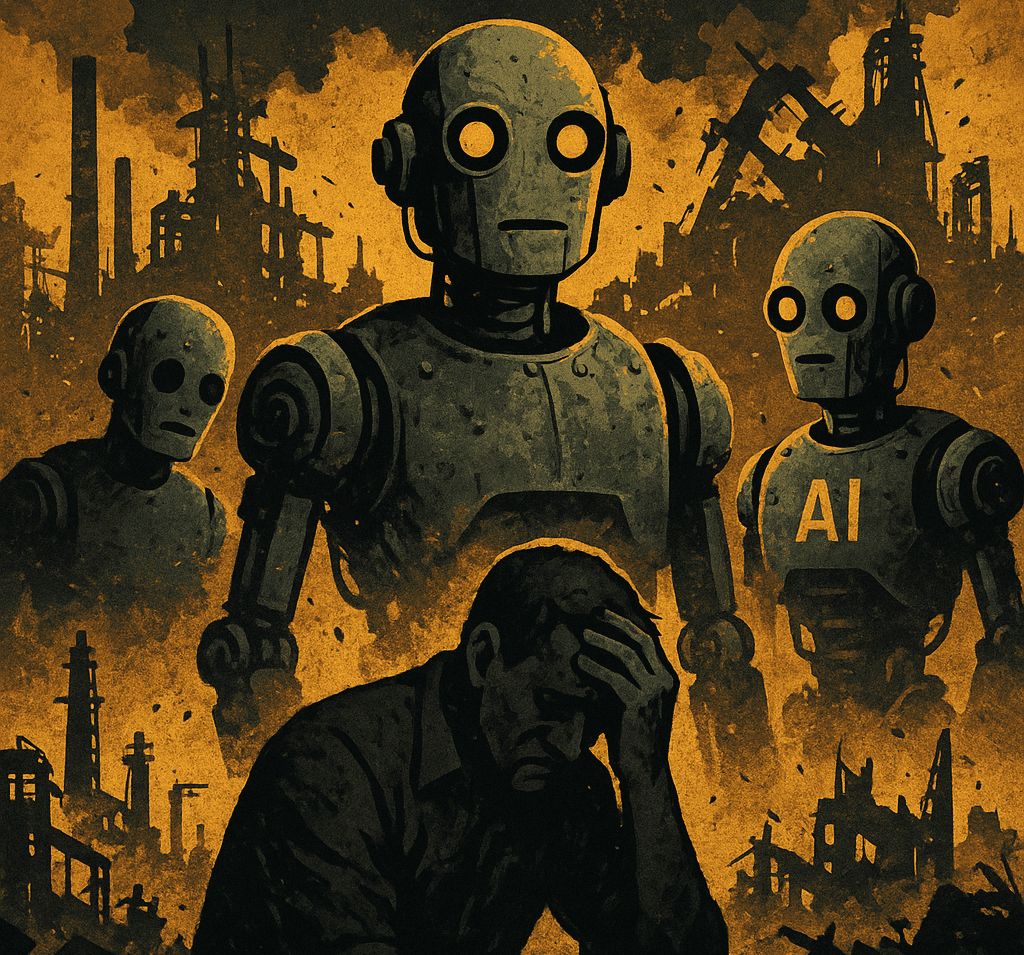
The Industrial Revolution reshaped the global economy, and the Digital Revolution pushed it further. But now, as automation and artificial intelligence (AI) replace human labor at an unprecedented pace, a paradox emerges: the more efficient production becomes, the less consumers can afford to buy. This post explores how the rapid advancement of AI and automation is accelerating economic collapse and what it means for the future of industry, commerce, and civilization itself.
The Disappearance of the Middle Class
As automation erodes traditional employment sectors, middle-class jobs are disappearing at an alarming rate. While high-skill jobs in AI development and maintenance exist, they are few and highly specialized, leaving the majority of displaced workers with few alternatives.
Deflationary Spirals as Automation Reduces Wages and Demand
With fewer people employed and wages declining, consumer demand weakens. This triggers deflationary pressures, causing prices to fall. While lower prices may seem beneficial to consumers, they have destructive long-term effects on the economy. Businesses, facing declining revenues, cut wages further or lay off more workers, exacerbating unemployment. The cycle repeats, worsening economic stagnation.
Moreover, deflation increases the real value of debt. Households and businesses struggle to service loans as their incomes dwindle, leading to a rise in defaults and financial instability. Central banks attempt to counteract this with lower interest rates, but when rates are already near zero, their options are limited. The economy falls into a downward spiral where reduced spending leads to lower revenues, forcing further cost-cutting and layoffs, perpetuating the cycle until economic collapse becomes inevitable.
The Inability of Monetary Policies to Counteract Job Loss-Driven Stagnation
Traditional economic policies rely on stimulating demand through interest rate adjustments and fiscal intervention. However, in an era where automation replaces jobs at a rate that policies cannot keep up with, monetary tools lose their effectiveness. Governments may attempt quantitative easing, stimulus checks, and public job programs, but these solutions are temporary patches on a structural problem. Without meaningful policy shifts, the global economy faces prolonged stagnation or even collapse.
Disclaimer: This post has been generated and/or enhanced with the assistance of artificial intelligence tools, using information available and believed to be current and accurate at the time of creation. However, the content may include speculative, interpretive, or subjective elements and does not necessarily reflect objective reality. The views and opinions expressed are solely those of the author and do not represent or imply the views of any employer, organization, or affiliated individuals. No endorsement, verification, or review by any such entities has been conducted or should be inferred.
