
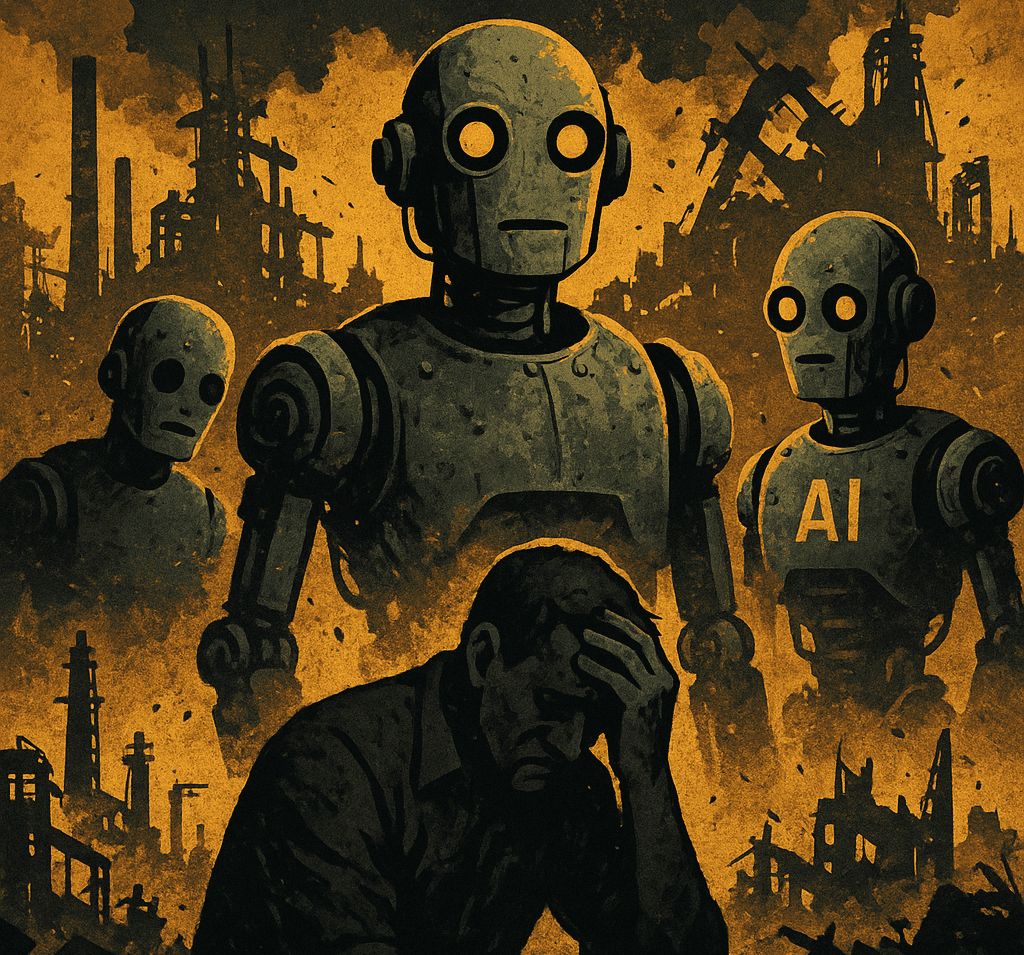
The Industrial Revolution reshaped the global economy, and the Digital Revolution pushed it further. But now, as automation and artificial intelligence (AI) replace human labor at an unprecedented pace, a paradox emerges: the more efficient production becomes, the less consumers can afford to buy. This post explores how the rapid advancement of AI and automation is accelerating economic collapse and what it means for the future of industry, commerce, and civilization itself.
The Paradox of Affordability vs. Abundance
One of the most striking contradictions of modern economies driven by automation is the paradox of affordability versus abundance. As automation enables unprecedented levels of production, goods and services become more abundant than ever before. Yet, as human labor is displaced, consumer purchasing power declines, creating a fundamental breakdown in the traditional supply-and-demand model.
This paradox means that while shelves may be stocked with products, fewer people can afford to buy them. This scenario is not just a theoretical concern—it has historical precedents in economic recessions where production outpaced consumer demand. However, in this case, automation exacerbates the problem by permanently reducing employment opportunities, effectively severing the link between productivity and consumer viability.
The Underpinning Factors of the Human Component in Manufacturing
For centuries, the labor force has been an essential component of manufacturing. Human workers not only operated machines but also functioned as consumers, fueling economic growth through their wages. When workers had disposable income, they reinvested it into the economy by purchasing the very goods they helped create. This cycle ensured continued industrial growth and innovation.
Automation disrupts this balance by removing the need for human workers. Unlike previous technological advancements that created new job opportunities, AI-driven automation often replaces entire professions with no alternative employment options. Without wages, displaced workers lose their purchasing power, leading to a demand crisis that undermines the very industries that automated them.
The Collapse of Traditional Economic Models
In traditional economic models, productivity gains from automation were expected to translate into higher wages and improved living standards. However, as automation advances beyond the point of merely augmenting human labor and instead replaces it outright, these models fail. The wealth generated by automation is concentrated among those who own the capital—corporations and investors—while the working class faces chronic underemployment.
This shift leads to an economic environment where the price of goods falls due to high production efficiency, but wages fall even faster, leading to a deflationary spiral. As fewer people can afford to participate in the economy, businesses struggle to maintain profitability despite their ability to produce more. The result is a paradox in which wealth exists in abundance but remains inaccessible to the majority.
Potential Solutions and the Path Forward
To address the affordability vs. abundance dilemma, new economic models must be explored. Some proposals include universal basic income (UBI), restructuring taxation to ensure fair wealth distribution, and redefining economic success beyond traditional measures of employment and GDP growth. Without such adaptations, the economy risks prolonged stagnation, social unrest, and systemic collapse. The challenge ahead is not merely one of technological progress but of ensuring that progress benefits society as a whole. The failure to integrate automation into a sustainable economic framework threatens not just individual industries but the foundation of commerce itself.
Disclaimer: This post has been generated and/or enhanced with the assistance of artificial intelligence tools, using information available and believed to be current and accurate at the time of creation. However, the content may include speculative, interpretive, or subjective elements and does not necessarily reflect objective reality. The views and opinions expressed are solely those of the author and do not represent or imply the views of any employer, organization, or affiliated individuals. No endorsement, verification, or review by any such entities has been conducted or should be inferred.
