
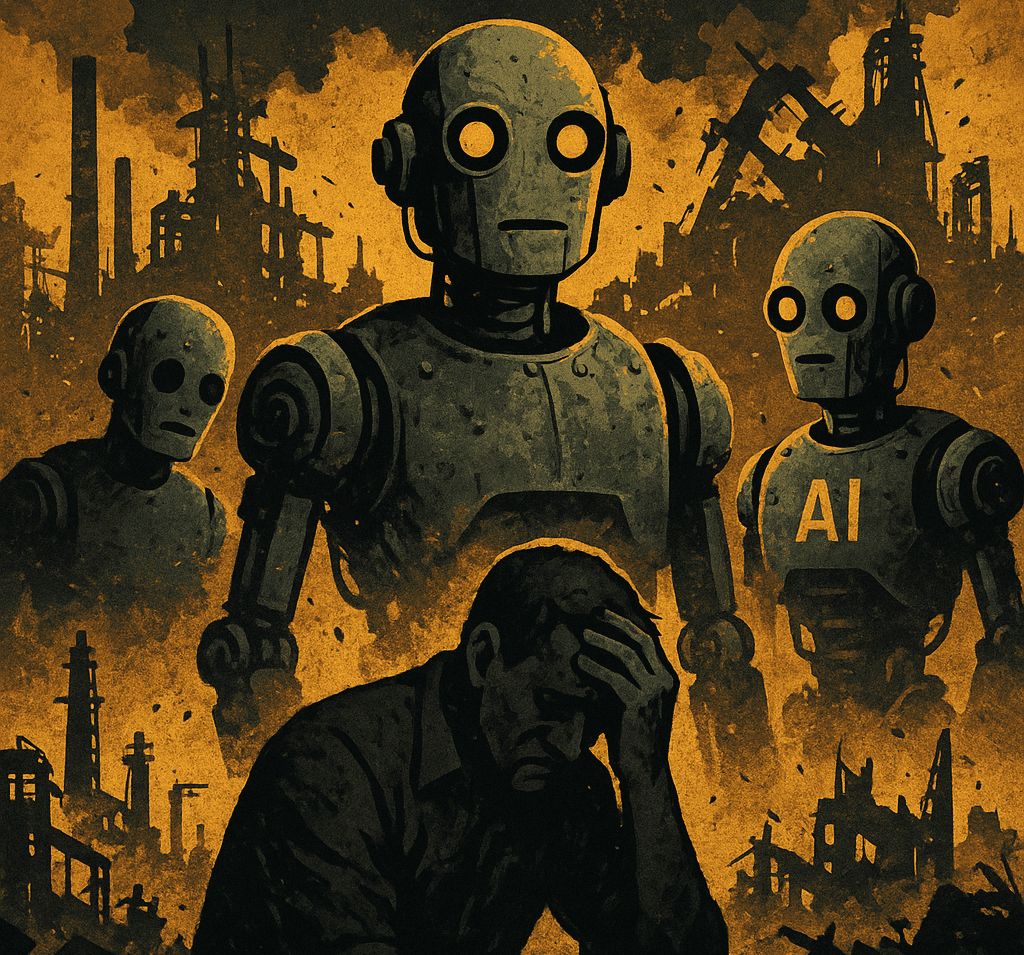
The Industrial Revolution reshaped the global economy, and the Digital Revolution pushed it further. But now, as automation and artificial intelligence (AI) replace human labor at an unprecedented pace, a paradox emerges: the more efficient production becomes, the less consumers can afford to buy. This post explores how the rapid advancement of AI and automation is accelerating economic collapse and what it means for the future of industry, commerce, and civilization itself.
The Dangers of Corporate-Political Alliances
As automation and AI concentrate wealth into the hands of a few dominant corporations, these entities begin to wield unprecedented influence over governments. Through lobbying, political donations, and policy manipulation, corporate interests increasingly shape legislative agendas to benefit their monopolistic hold on industries. Governments, in turn, become complicit in maintaining the status quo, prioritizing corporate profitability over the economic well-being of citizens.
When policymakers align with corporate interests instead of public welfare, social and economic instability follows. Tax policies favor large corporations, regulations suppress competition, and labor protections erode, further exacerbating income inequality. The growing disconnect between government policies and the struggles of ordinary citizens fosters widespread disillusionment, breeding resentment and unrest.
Civil Unrest and the Dissociation of Government from Citizens
As corporate monopolies expand and political alliances deepen, the government’s role in protecting the economic security of its people diminishes. When citizens realize that their interests are no longer represented, protests, strikes, and even riots become inevitable.
History has shown that economic disenfranchisement leads to civil unrest. From the labor revolts of the early 20th century to recent populist uprisings, economic hardship drives people to demand change. If current trends continue, governments that fail to address corporate overreach and economic disparity may face destabilization, leading to either authoritarian crackdowns or revolutionary movements aimed at redistributing power and resources.
How a Handful of AI-Driven Corporations Control the Global Economy
With AI and automation at the forefront of economic transformation, a handful of tech giants wield immense power over the global economy. Companies such as Amazon, Google, Microsoft, and Tesla are at the forefront of AI-driven automation, setting the standards for digital infrastructure, logistics, and even government policy. Their control over critical technologies—such as cloud computing, artificial intelligence, and supply chain automation—allows them to dictate market trends and influence economic policies worldwide.
As these corporations expand, they acquire or outcompete smaller firms, further centralizing control. This dominance results in an economic system where a few elite entities control the majority of production, data, and commerce, leaving little room for innovation or competition. The economic leverage these corporations wield often leads to regulatory capture, where government agencies tasked with oversight are either influenced or outright controlled by corporate interests.
The Death of Competition in Tech, Retail, and Manufacturing
Corporate monopolization stifles competition across multiple sectors. In tech, small startups struggle to compete with trillion-dollar firms that have vast data reserves, AI capabilities, and logistical networks. In retail, AI-driven e-commerce giants dominate global supply chains, driving local businesses into extinction. Meanwhile, in manufacturing, automation ensures that only companies with massive capital investments can remain competitive, eliminating smaller players who cannot afford advanced robotics. Without competition, consumer choice diminishes, prices become artificially controlled, and wages stagnate due to the lack of alternative employment opportunities. The monopolization of industries not only consolidates economic power but also deepens wealth inequality, ultimately leading to market inefficiencies, exploitative labor practices, and growing civil unrest as people recognize the erosion of economic opportunity.
Disclaimer: This post has been generated and/or enhanced with the assistance of artificial intelligence tools, using information available and believed to be current and accurate at the time of creation. However, the content may include speculative, interpretive, or subjective elements and does not necessarily reflect objective reality. The views and opinions expressed are solely those of the author and do not represent or imply the views of any employer, organization, or affiliated individuals. No endorsement, verification, or review by any such entities has been conducted or should be inferred.
