
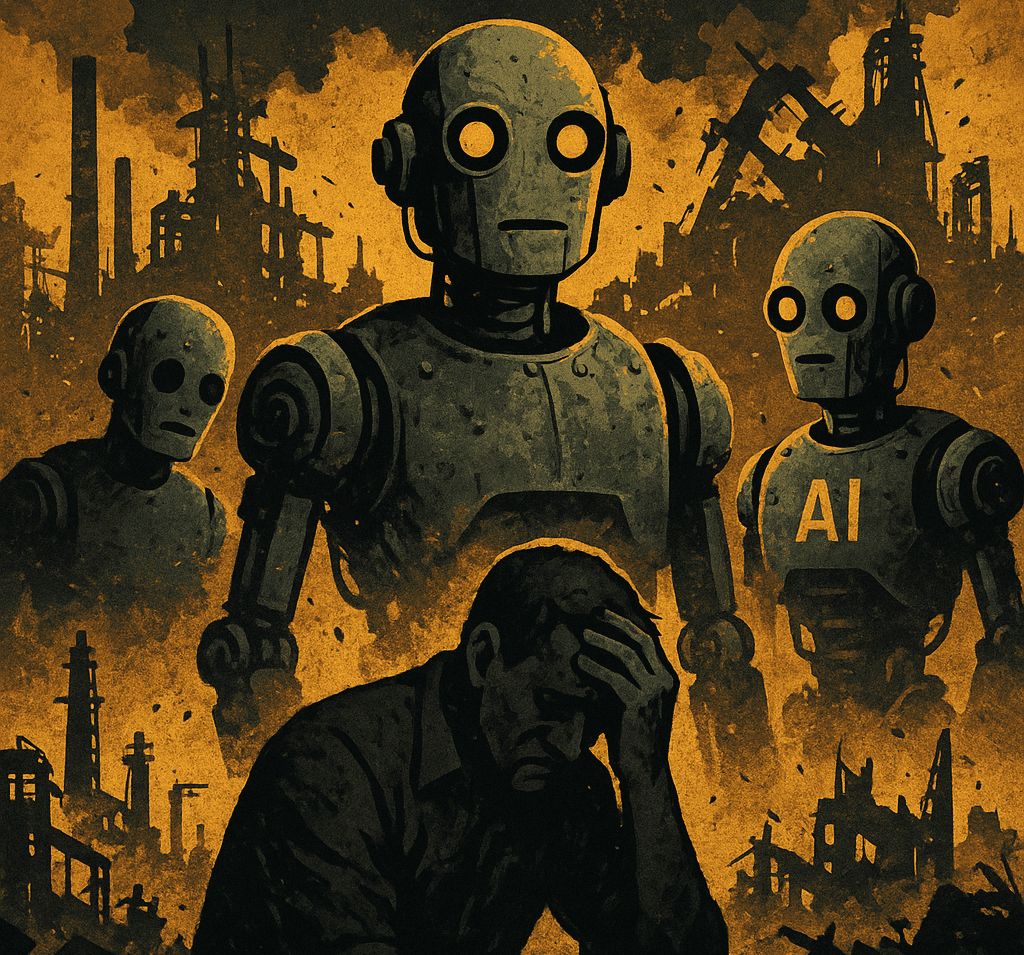
The Industrial Revolution reshaped the global economy, and the Digital Revolution pushed it further. But now, as automation and artificial intelligence (AI) replace human labor at an unprecedented pace, a paradox emerges: the more efficient production becomes, the less consumers can afford to buy. This post explores how the rapid advancement of AI and automation is accelerating economic collapse and what it means for the future of industry, commerce, and civilization itself.
The Death of Traditional Financial Systems
The rapid shift toward AI-driven economic models has fundamentally disrupted traditional financial systems. With declining employment rates and weakened consumer purchasing power, conventional banking structures, credit markets, and monetary policies struggle to remain relevant. The automation-driven wealth gap exacerbates financial instability, rendering existing institutions incapable of sustaining economic equilibrium. Debt-laden economies collapse under deflationary pressures, and fiat currencies lose their effectiveness as tools of monetary policy. Central banks attempt radical interventions—negative interest rates, digital currencies, and corporate bailouts—but ultimately fail to restore economic balance. As trust in conventional financial institutions erodes, alternative financial systems emerge, including decentralized digital economies, barter networks, and corporate-controlled financial infrastructures that bypass traditional banking entirely.
The Collapse of Consumer Banking as Spending Diminishes
With widespread automation leading to mass unemployment, consumer spending declines sharply. As individuals lose their primary sources of income, personal savings deplete, and discretionary spending plummets. Banks, reliant on loan repayments and transaction fees, face financial distress as defaults on mortgages, credit cards, and personal loans rise. Historical parallels can be drawn to the Great Depression, when a lack of consumer spending led to a collapse in banking institutions, forcing widespread bank failures.
The Failure of Stock Markets Reliant on Economic Growth
Stock markets, historically dependent on continuous economic expansion, face a paradox: productivity increases due to automation, yet consumer demand collapses. This disconnect mirrors past economic crises, such as the 2008 financial meltdown, where speculative investments collapsed under unsustainable economic assumptions.
How Cryptocurrency and Decentralized Finance Emerge in Response As trust in traditional financial institutions erodes, decentralized finance (DeFi) and cryptocurrencies become alternative financial infrastructures. This shift echoes the post-2008 rise of Bitcoin as a hedge against centralized banking failures. However, even these decentralized systems face challenges in sustaining an economy without consumer participation.
Disclaimer: This post has been generated and/or enhanced with the assistance of artificial intelligence tools, using information available and believed to be current and accurate at the time of creation. However, the content may include speculative, interpretive, or subjective elements and does not necessarily reflect objective reality. The views and opinions expressed are solely those of the author and do not represent or imply the views of any employer, organization, or affiliated individuals. No endorsement, verification, or review by any such entities has been conducted or should be inferred.
